Do you spend hours in front of screens every day? Are your eyes often dry, tired, and irritated? Does your vision become blurry every now and then?
Smartphones, tablets, computer screens, VR headsets – the proliferation of digital devices has resulted in a spike of the average screen time. Working adults spend over 9 hours in front of screens every day. Correspondingly, vision concerns related to excessive screen time are prevalent: dry eye, eye strain, computer vision syndrome…
In this article, we explain what dry eye is, how exposure to screens can cause dry eye and other eye conditions, and how you can relieve eye discomfort and protect your eyes against damage triggered by screen exposure.
Dry Eye
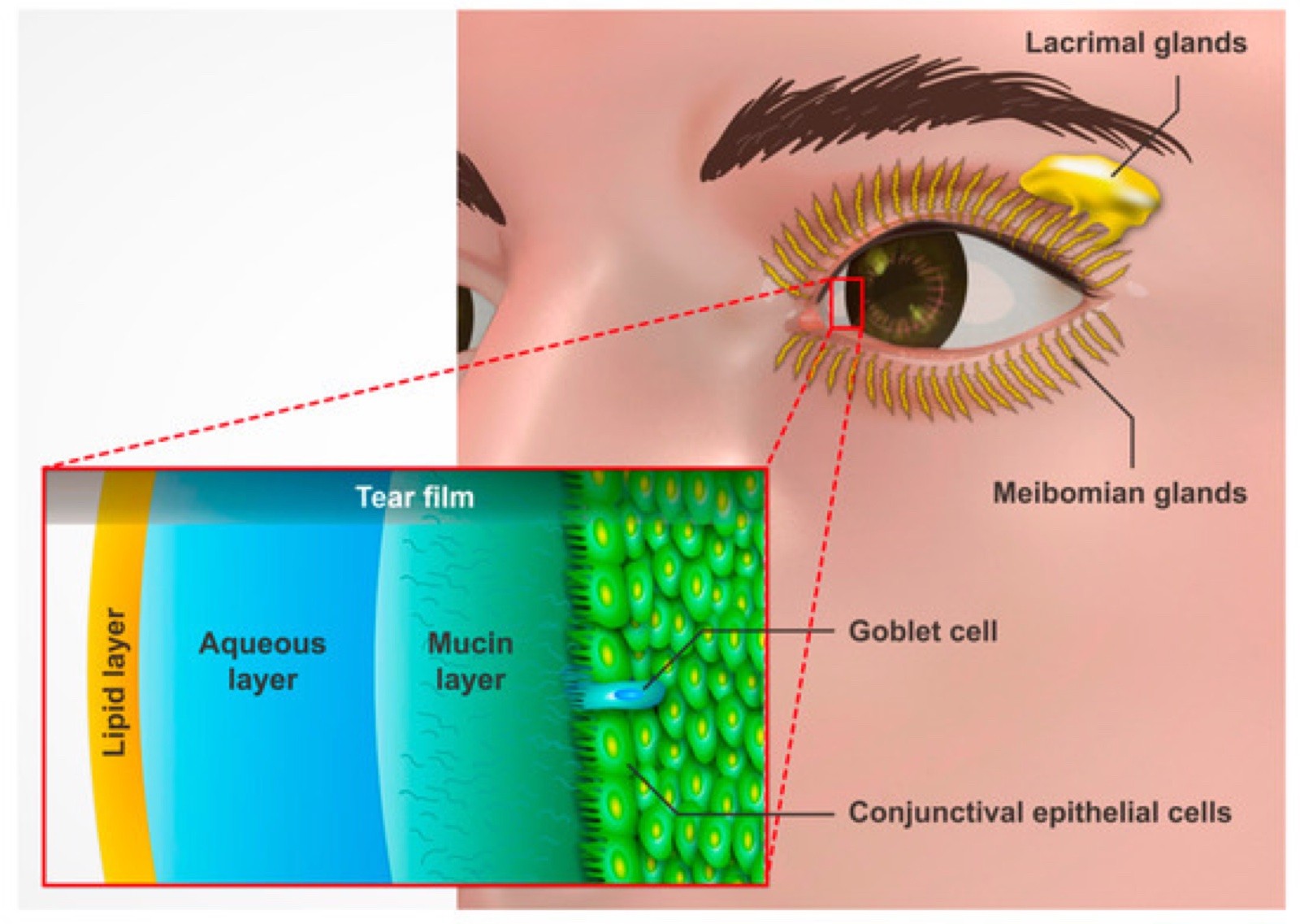
Dry eye is an extremely common condition, and it is also a very complex multifactorial one.
Fundamentally, dry eye disease happens when the tear film is not functioning normally. The tear film has multiple layers. For it to lubricate the eye surface properly, it has to both secrete tears and prevent them from evaporating too quickly.
However, a wide variety of factors can impede these functions and lead to a set of interrelated mechanisms that trigger dry eye: tear instability, tear hyperosmolarity (i.e. too much salt in tears), inflammation, and ocular surface damage. (Kanski’s Clinical Ophthalmology). Possible causes include:
genetic disorders
age-related changes
hormonal changes
allergy
contact lens wear
surgery
medications
inflammatory diseases
vitamin A deficiency
low blink rate
…
As there are many possible causes of dry eye, if you have severe dry eye symptoms, it is important to consult an ophthalmologist.
Screen Time, Dry Eye, and Other Eye Conditions
It is commonly known that too much screen time can make our eyes dry and irritated, but why does it happen? There are two main mechanisms at play: reduced blink rate and blue light damage.
When we blink, the tear glands in the eye release lipids into the tear film, which slow down the evaporation of tears. However, when we are staring at an LED screen, we tend to blink less frequently, which leads to reduced lipid secretion and increased tear evaporation.
Meanwhile, LEDs emit large amounts of blue light, which triggers oxidative stress and inflammation. Blue light has a shorter wavelength and contains more energy than other wavelengths of visible light. It triggers more oxidative stress in cells and causes more damage. These mechanisms can happen to the surface of the eye. As a literature review summarises, ‘overexposure to blue light with short wavelengths can increase oxidative stress, increase the expression of inflammatory factors in the cornea and tear film, decrease cell viability, and cause dry eye.’ (Source)

Excessive screen time causes not only dry eye but also other eye conditions. Digital eye strain is a common one. Our eyes are not well adapted for staring at something at a close distance for long periods of time. Furthermore, because of physical properties of electronic screens, our eyes have to work harder to stay focussed, and in particular, this can strain the ciliary muscles, which control the lens to make it stay focussed.
More worryingly, the cellular damage triggered by blue light affects other parts of the eye as well, and its effect on the retina is especially concerning. While UV is mostly blocked by the lens and does not reach the retina at the back of the eye, blue light can penetrate the eye all the way and reach the retina. As the above-mentioned study states, ‘mounting evidence suggests that overexposure to blue light induces a significant increase in ROS production, which contributes to the loss of photoreceptors, lipid peroxidation and cell apoptosis‘. (Source)
In short, excessive screen time can lead to both visual discomfort such as dry eye and eye strain and more serious effects on eye health.
What You Can Do
Given the negative effects of screen exposure on your vision, the best thing to do would be to reduce screen time. However, it is not always easy both because of the addictiveness of social media apps and because of occupational demands.
There are several easy strategies for improving your eye comfort and protecting your vision:
take regular breaks from screens to look at something farther away (the 20-20-20 rule: every 20 minutes, look at something 20 feet away for 20 seconds)
maintain good ambient lighting – preferably warm white light
wear blue light glasses (e.g. UmbraPlus™ Glasses can block over 96% of high-energy blue light between 380nm and 440nm)
reduce the brightness of your screens and use blue light filtering apps or settings (e.g. Night Shift on iPhone)
use high-quality preservative-free eye drops
correct nutritional deficiencies and increase antioxidant intake
As mentioned above, vitamin A deficiency can cause dry eye. In addition, there are several other nutritional ingredients that are highly beneficial for dry eye and overall eye health:
vitamin E: an antioxidant that protects against oxidative stress and improves tear quality
vitamin B2: an essential nutrient that is particularly important for photoreceptor cells
omega-3s: fatty acids that have anti-inflammatory effects and improve tear film function
bilberry extracts: they contain anthocyanins, powerful antioxidants that counteract oxidative stress and reduce inflammation. Bilberry extracts have also been extensively studied in relation to dry eye and eye fatigue related to screen time. (Source)
lutein and zeaxanthin: these antioxidants boost macular pigments, which absorb blue light and neutralise oxidative stress
To help our customers protect their vision against oxidative stress caused by excessive screen time, we have created Visor™ Eye Health Supplement. It contains bilberry extracts, lutein, zeaxanthin, vitamin B2, vitamin E, beta carotene (source of vitamin A), and vitamin C. It is backed by research, free from artificial fillers, and rigorously tested.
Visor™ can be taken on its own or along with Clearer™ to give your eyes extra nutritional support against dryness and boost their cellular defence against blue light damage.
Visor™ contains beta-carotene and is not suitable for people who smoke or have had heavy occupational asbestos exposure. Check your total intake from other supplements.
Filed under
Screens & light